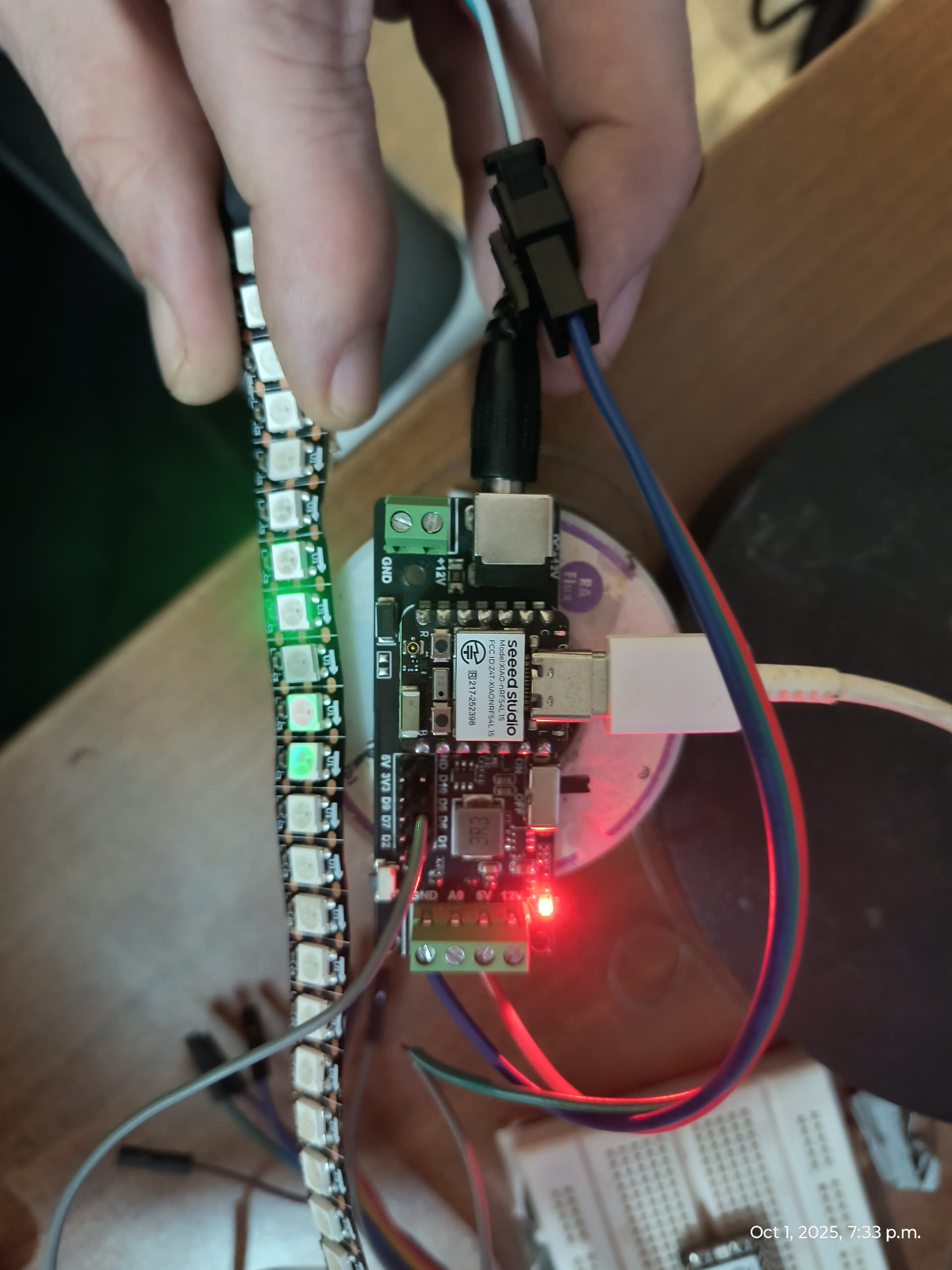
I finally figured out how to run the LED strip sample on the Xiao nrf54L15! It requires creating custom bindings,a very specific overlay, and only works on SPI MOSI pin d10…
I posted the modified zephyr sample here if anyone else is curious.
nrf54L15-binding.h
And the led strip definition in the .overlay and defconfig are the key parts I changed.
It’s a Great Overview of the Nordic POV… it has a little bit of everything in it, another reason they OWN the BLE space.
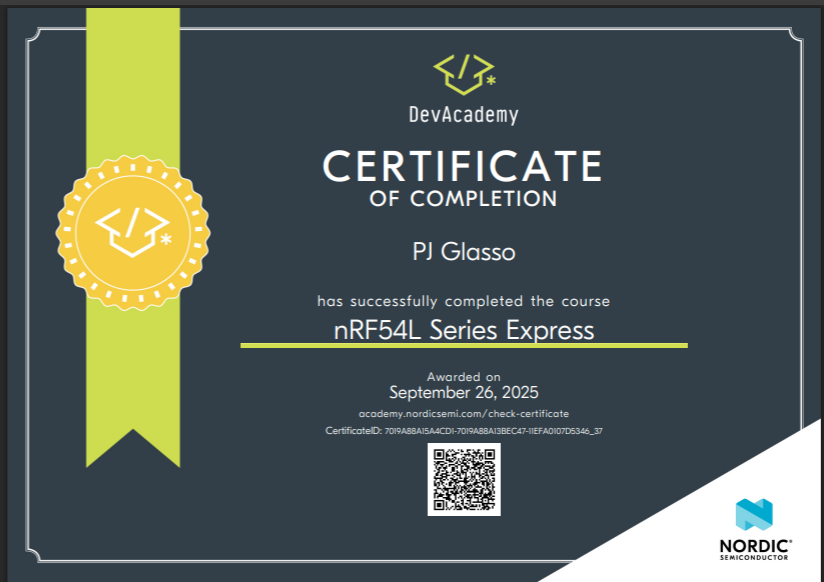
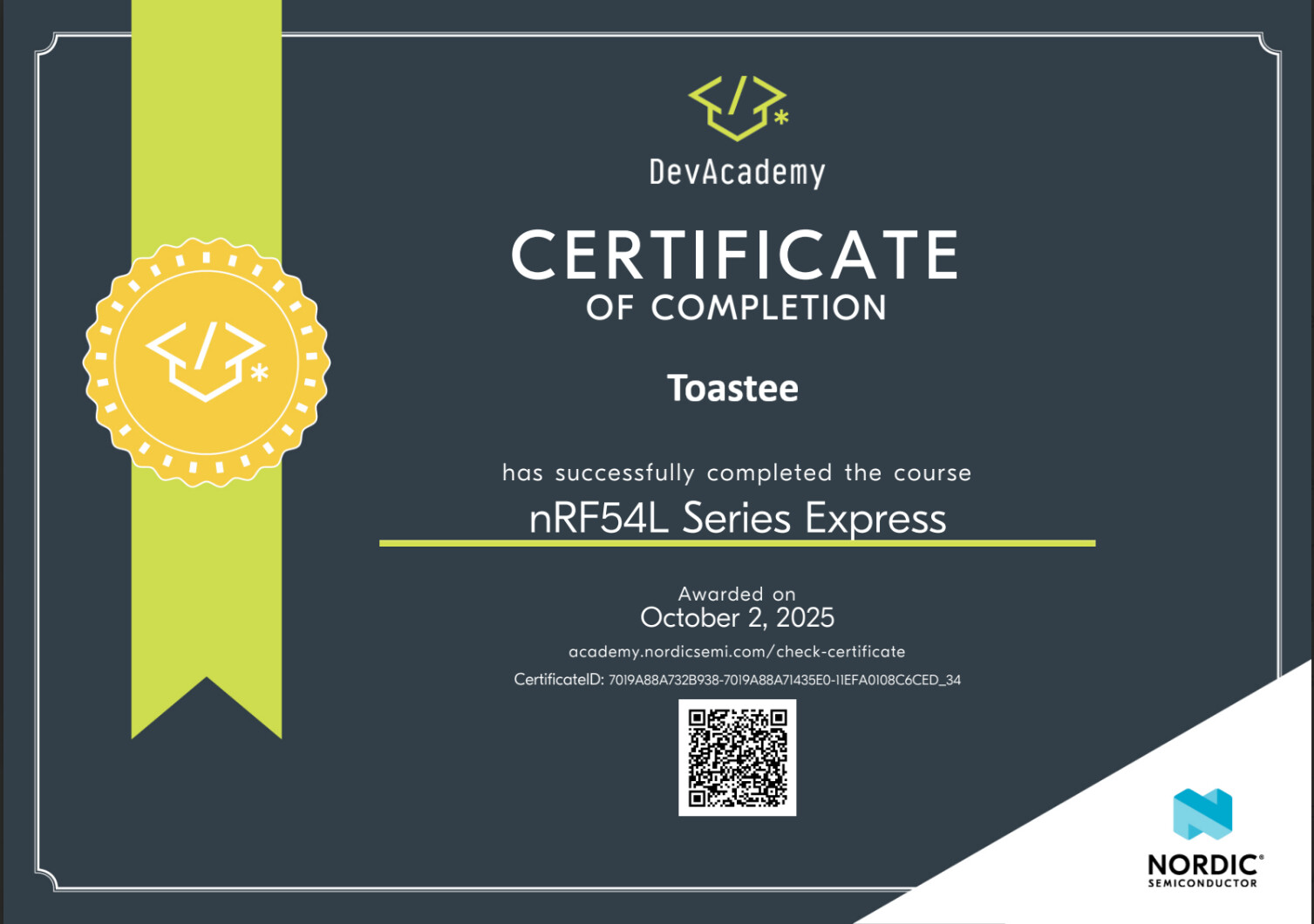
Check out all the FREE dev academy courses to get you SDK freak on and learn some of the new Tech coming to the scene, WIFI Locationing, channel sounding, Enhanced BLE version 6.0 standards and more!
SO, I’m feeling a certain way on this coming into the Christmas.
Encouraged that Seeed took a shot. I’m a STRONG if you have a mature app on the Nrf52 series and it’s not broke, then Don’t make any sudden moves investigate what the Seriously faster speed and more ram can do for YOU
If your in a ML situation it is a nice bump up
If it is a BLE heavy then you got some “splaining” to do.
Antenna Gate
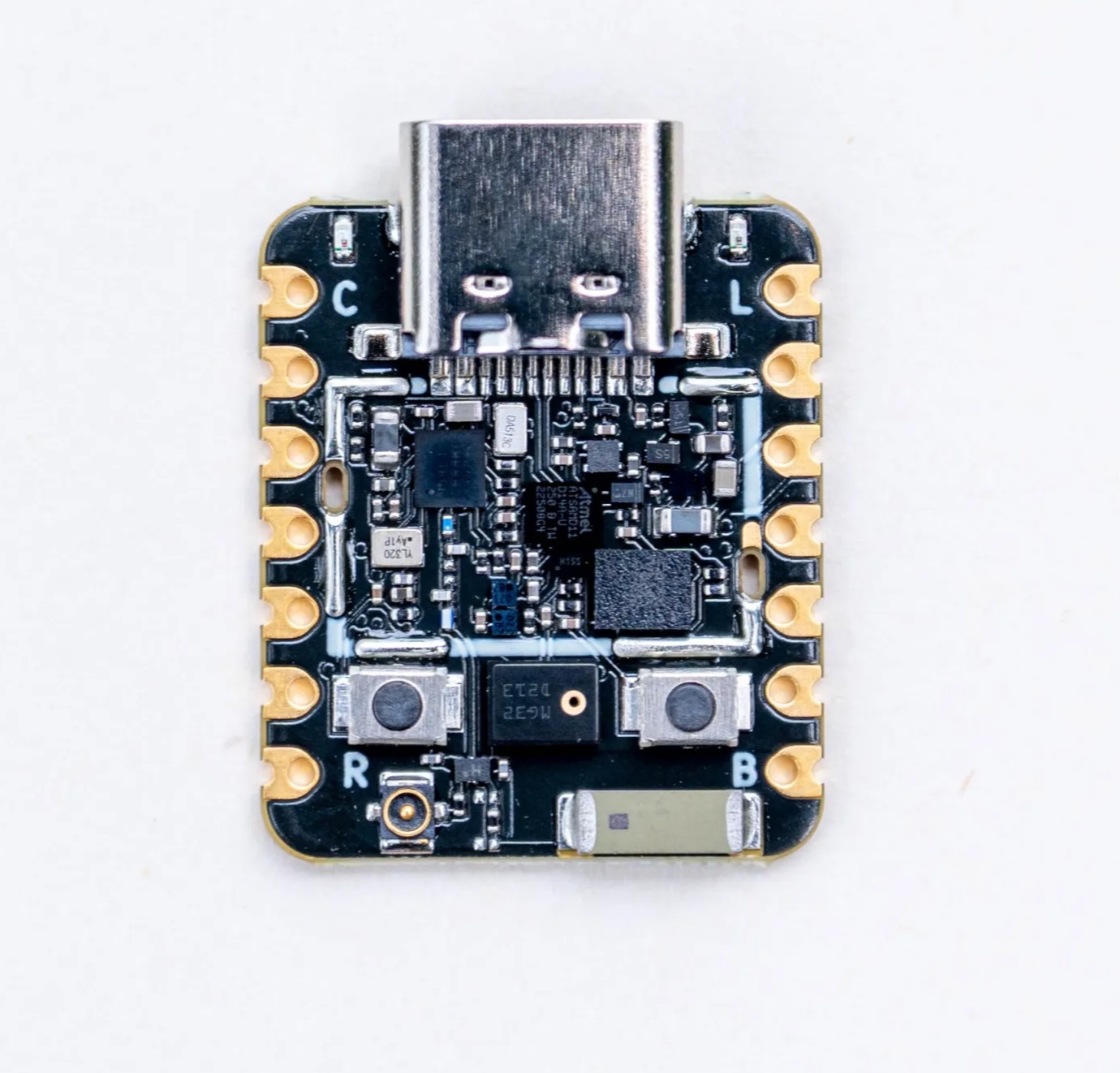
, means it’s going to really be useful only in a non-Battery dependant app. IMHO The resistor values for the voltage divider (battery level reading) component selection and some other design choices are not optimum for the deepest sleep power consumption.
That being said :
It’s not all bad. The Better receiver in this silicon radio section appears to me, I get better connections on the Sensor Node projects distributed Nodes with nRF54 Series than m|y nRF52’s, Higher RSSI’s, faster and longer distance indoors (metal roof warehouse)
Also the jury is still out in some ways for the Lowest power numbers.
I have been using the onboard Antenna and one EXT, I just received (back-ordered) more of the external ones. So I’ll check it with some demo video action time permitting
I like that the software is coming around and getting a lot of attention like only Nordic does. Seeedineer’s are making headway every week on it and Wiki updates are more Frequent… meanwhile the innovations keep coming
this guy says maybe an LM20 in the back and some other game changing industry disruptor tech coming 1st-QTR/2ndQtr 2026
Season’s greetings, indeed! Thanks for your answer.
My app is quite straightforward on requirements and they are:
Heavy BLE usage at short range (I should be very much ok with 2-3 meters, not more)
There’s an application on Computer and nrf SOC should actively communicate with it, which means it is either in no sleep, or really short sleep cycles, so the application is always able to send some data to SOC and the latter should stay responsive. Of course, I can implement something like a long sleep if the app doesn’t send any data for 2-3 minutes and then demand a “manual“ wake-up form the board. But what I mean here is that I encourage the system to stay in active BLE mode.
Battery powered. The battery should withstand 5-8 hours
With the referenced 6mA in active antenna mode for nrf52840 I should be fine already. But I was thinking if moving towards 4mA in nrf54 is a wise move, as overall this is 30% longer battery life. The processing power of nrf52 is more than enough, I don’t do heavy math, and the storage of nrf52 should be also fine, though I haven’t tested DFU yet to see, whether it is enough.
So, in short, the only parameter I look at comparing both SOCs is the active antenna mode, specifically for my point 2.



 PJ
PJ 




 PJ
PJ 




 The resistor values for the voltage divider (battery level reading) component selection and some other design choices are not optimum for the deepest sleep power consumption.


 this guy says maybe an LM20 in the back
  and some other game changing industry disruptor tech coming 1st-QTR/2ndQtr 2026
 PJ
PJ 