I measured how much the communication range improves when using Coded PHY with XIAO nRF54L15 and XIAO nRF52840.
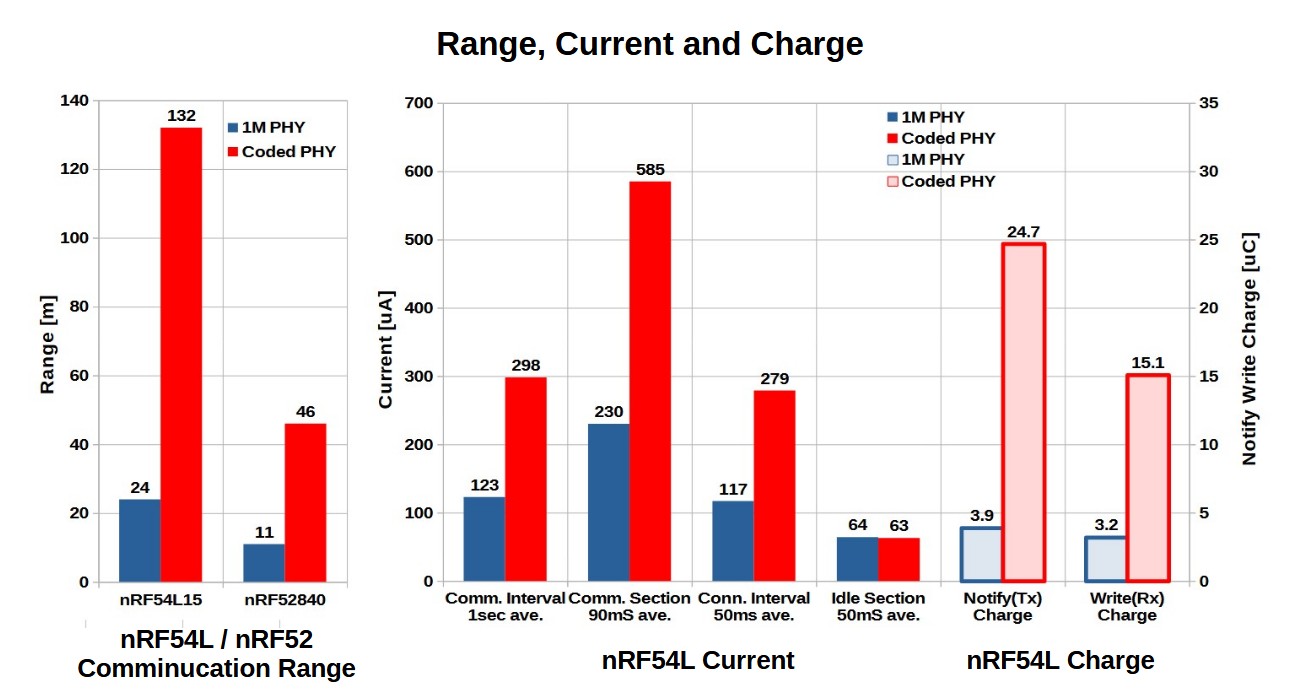
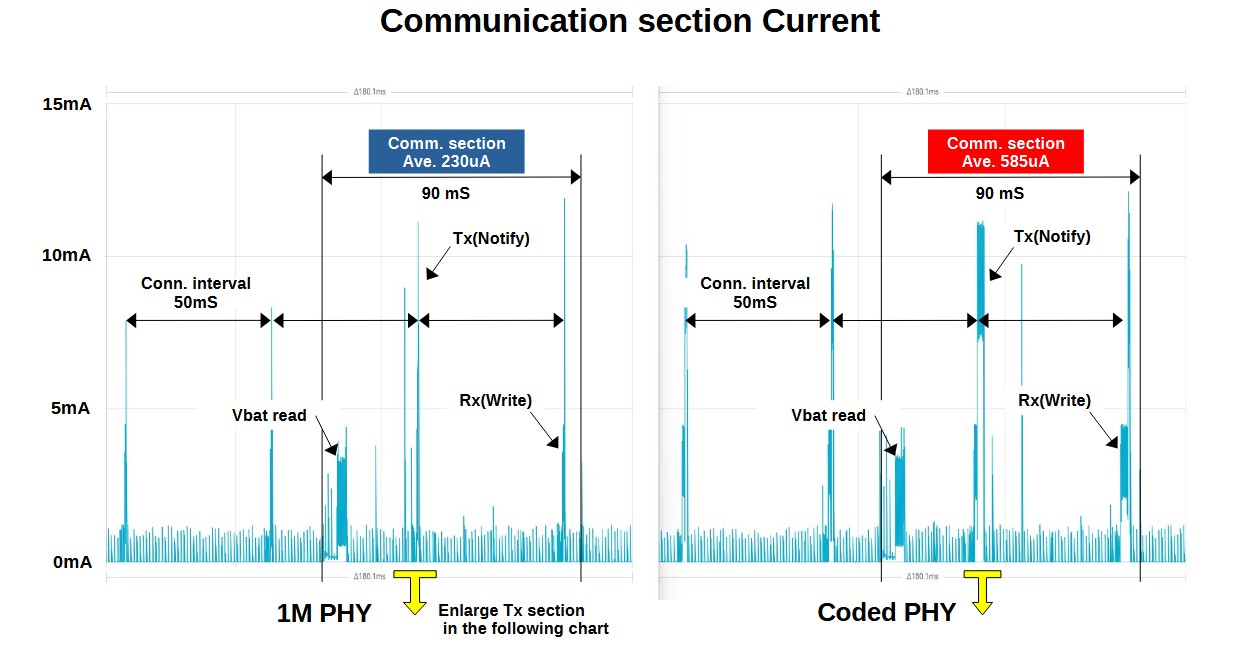
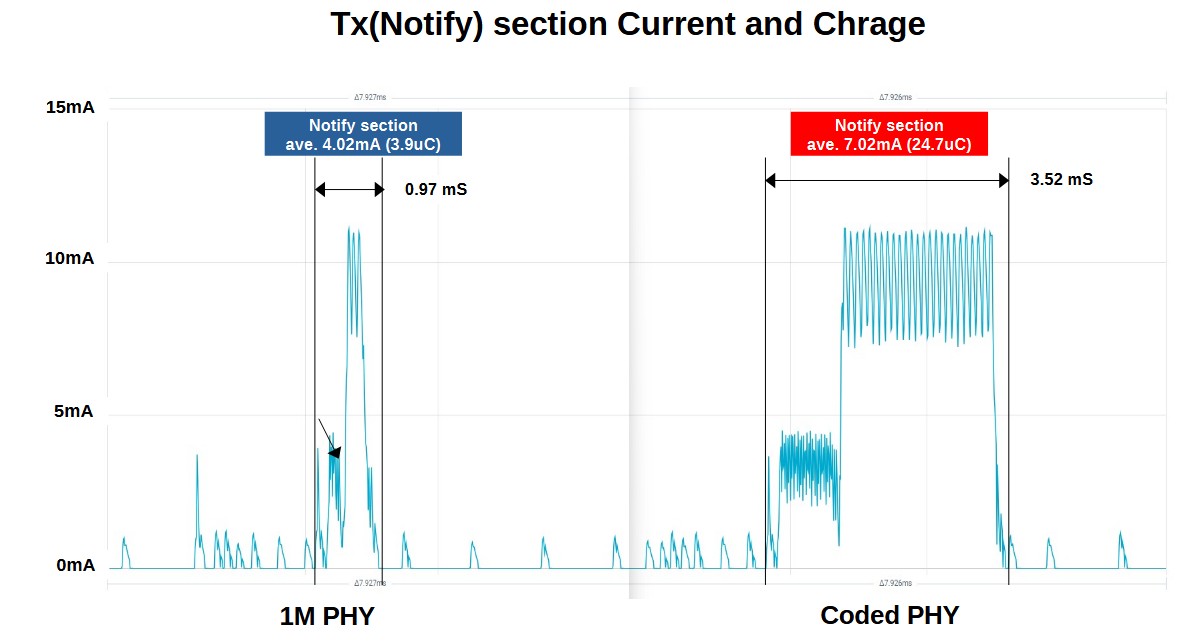
Compared to 1M PHY, using 8S Coded PHY increased the communication range by more than 4x, which closely matches the theoretical expectation. However, this improvement comes at a cost: due to the increased amount of transmitted data, the current consumption with Coded PHY more than 2x.
For both nRF54L and nRF52, measurements were performed under the following conditions:
- Transmit power: 8 dBm for both Peripheral and Central (1M PHY and 8S Coded PHY)
- Bidirectional communication every 1 second using 16-byte data via Notify and Write
- Using onboard ceramic antenna
- Devices placed 1 m above ground on a damp baseball field
- Communication range measured at the point where the connection was lost
RSSI values varied significantly and should be considered only as a reference.
In practice, connections were lost when RSSI dropped below approximately −90 dBm for 1M PHY and −100 dBm for Coded PHY.
It should also be noted that the onboard ceramic antenna is directional. Maintaining optimal antenna alignment between the Peripheral and Central devices while measuring long communication distances was therefore quite challenging.
While acknowledging that the results depend on measurement conditions, the following conclusions were obtained:
- For both nRF54L and nRF52, the communication range with Coded PHY was more than 4x that of 1M PHY.
- The communication range of nRF54L was more than 2x that of nRF52.
- The maximum measured communication range for nRF54L was 132 m.
Regarding current or charge consumption on nRF54L, compared to 1M PHY:
4. The 1-second average current with Coded PHY was more than 2x that of 1M PHY.
5. The charge consumed during the TX period was approximately 6x higher.
6. The charge consumed during the RX period was approximately 5x higher.
I hope these results are useful for others evaluating Coded PHY.
POST_nRF54L_CodedPHY.zip (1.1 MB)
 As well as a 2x improvement indoors with range over the nRF52 Series from 30m-40 to easily 90m+
  the External antenna works but also adds to the power drain on the overall system. However more testing is needed
 PJ
PJ 