I’m using a recently bought XIAO W5500 Ethernet Adapter V1.2 as an ESPHome Bluetooth proxy for five RuuviTag sensors. It receives every tag 30–40 dB weaker than my phone and a USB Bluetooth dongle in the same position, and the most distant tag isn’t received at all. I believe the unit is defective.
Official ESPHome Bluetooth proxy firmware (esphome/bluetooth-proxies, Seeed config); all software and firmware up to date
Ethernet with PoE (802.3af); passive BLE scanning of RuuviTag advertisements
Tests
Antenna: checked the U.FL connection on the XIAO and replaced the supplied rod antenna with a larger, higher-gain RP-SMA antenna, mounted higher. That gained 4–7 dB at most; the gap remained.
Antenna removed: no advertisements are received at all, so the antenna is in the signal path.
Power: no RSSI difference between PoE and USB-C (5 V).
Distance: moving a tag from a few metres to about 40 cm from the antenna improved RSSI by only about 2 dB, to −77 to −81 dBm.
References at the same position: a Google Pixel 11 Pro (Ruuvi Station app), and a USB Bluetooth dongle with external antenna on the Home Assistant host (Realtek RTL8761BU, USB ID 0bda:8771).
RSSI comparison (dBm)
RuuviTag
USB dongle (RTL8761BU)
Pixel 11 Pro
XIAO W5500
Indoors (≈40 cm)
−38
−45
−77 to −81
Upstairs
−74
−70
−97 to −99
Downstairs
−74
−75
−102 to −103
Outdoors
−76
−82
−97 to −101
Garage
−86
−90
not received
The Pixel and the dongle agree within a few dB. The XIAO is consistently 25–40 dB weaker, which points to a fault in its RF path (U.FL connector, pigtail or module), not to range or configuration.
Questions
Is weak Bluetooth reception known on V1.2 units? The early-batch RF issue discussed on the Home Assistant forum shouldn’t apply to a unit ordered in October 2026.
Is there anything else you’d like me to test?
If the unit is defective, how do I arrange a replacement?
So you will want to use and older BSP, when you build it.
The newer BSP has some issue’s check the GIT on it. Also do a Visual inspection on the Antenna wire… to S3, if you swap the external antenna and nothing changes, check the IPX connector with magnifier. Sounds like a BAD connection.
Firmware / BSP Version Mismatch: Running a newer Board Support Package (BSP) or mismatched ESPHome proxy configuration version can alter radio power calibration tables, Bluetooth stack parameters, or controller timing.
Power: I already tested PoE vs. USB-C (5 V): no difference in RSSI, so I think the PoE supply is ruled out.
IPX connector: I’ll inspect the connector and the antenna lead under a magnifier and report back.
BSP: Could you point me to the GitHub issue you mean, and which ESP-IDF/BSP version is known to work? Then I can build a test firmware with that version and compare the RSSI.
Ok, SO good work, sounds like 98% covered.
Look on Epressif’s GIT you find it, there is one about the Proxy code/Ble, from my old notes when I had one, when they first came out.
" The BLE Issue: When allocating large framebuffers in external SPIRAM (PSRAM) via the BSP configuration, the ESP32-S3 caches heavily over its Octal SPI bus. If a BLE stack attempts to fetch data straight from an unaligned PSRAM memory chunk inside a display interrupt callback, it triggers timing exceptions or hardware cache blocks, leading to dropped BLE frames and range degradation.
I don’t know if it is set at MAX either, (P9) is Highest TX (ble) so the comparison would be Apples to oranges maybe the difference.
@cgwaltney I can take a picture of the board if you like.
@PJ_Glasso A couple of notes: my unit runs only as a passive Bluetooth proxy, with no display or framebuffer, so the PSRAM issue shouldn’t apply. And since the RSSI values are the tags’ signals as received by each device, the XIAO’s own TX power doesn’t affect them. Passive scanning doesn’t transmit at all. So the comparison with the phone and the dongle is like for like.
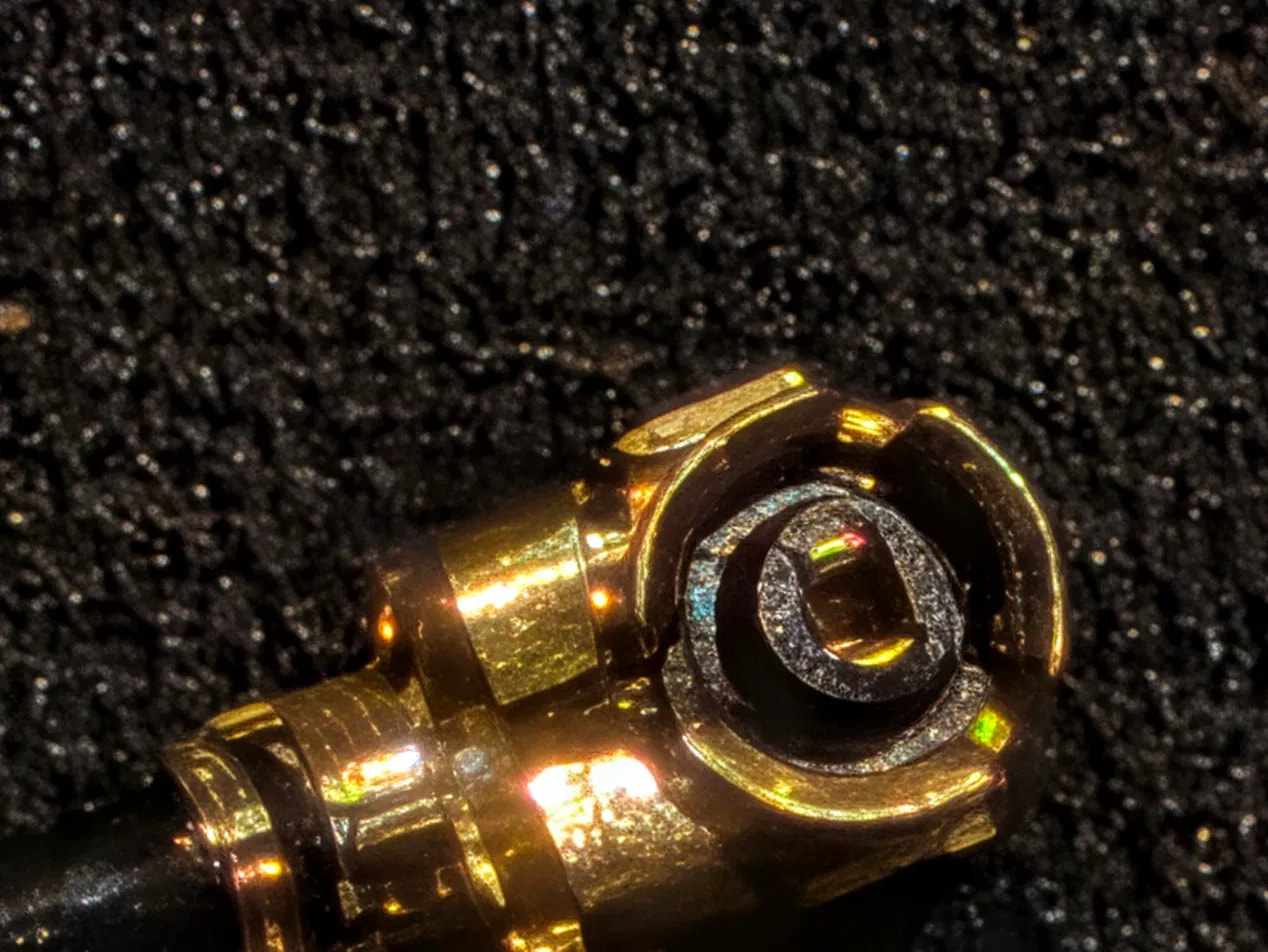
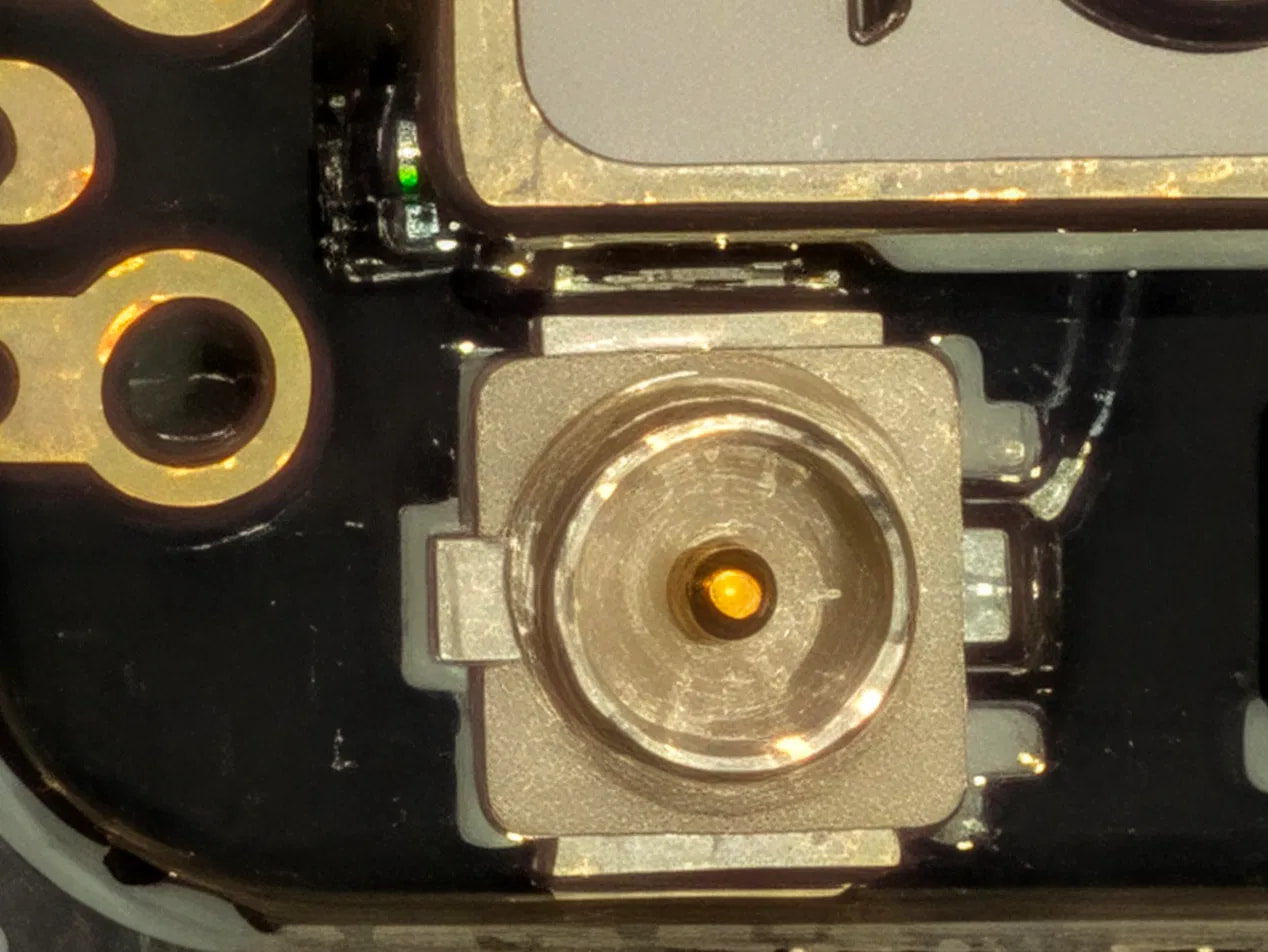
I attached pictures of the IPX connectors. They seem ok. I replugged everything, no change.
PJ’s PSRAM point doesn’t map onto this setup since you’re running a passive proxy with no framebuffer, and you’re right that passive scanning never transmits, so TX power is irrelevant to the RSSI you’re comparing. The IPX connectors in the photos look seated properly. That leaves the antenna itself or the front-end matching as the likely culprit, since a 30–40 dB gap is far too large to be normal variance between receivers. Swapping in a known-good 2.4 GHz antenna would isolate whether the stock one is the weak link before you dig into the W5500’s power section.
I did try a rod antenna, and I can try the antenna of the USB BT dongle tomorrow; that one is known to be good. After that, it could only be the cable from the board to the external antenna port.
But: This is a ready made unit. I chose this one to not have to debug, diagnose or build something. This is supposed to work out of the box.
Ah , I missed the passive scan portion.
Sounds defective, I would agree also. It should just work.
Check the antenna swap and see if anything changes,
If I where in it, I would try the BSP rollback and build it again, Just to be 100%. the version 3.3.X that brought the (PLUS) versions, I think broke some things ??
The antenna switch is also a “Meh” part IMO. on these.
I should get another one put a socket on it and swap out to a C5
The Seeedstudio device is prominently featured as being supported there (alongside with one from Olimex). I would expect that if there was something wrong with this, we’d see more complains from customers.
To rule out the antennas, I swapped them between the two devices: the dongle’s black antenna on the XIAO, and the XIAO’s white Seeed antenna on the USB dongle (Realtek RTL8761BU). Both devices in the same position as before (RSSI in dBm):
RuuviTag
XIAO W5500 + dongle’s antenna
USB dongle + Seeed antenna
Indoors (≈40 cm)
−74
−38
Upstairs
−100
−68
Outdoors
−97
−70
Downstairs
−101
−78
Garage
not received
−82
Conclusion
The supplied Seeed antenna works perfectly on the USB dongle.
The XIAO stays 30–36 dB weaker even with the dongle’s known-good antenna, the same as with its own antenna.
PoE vs. USB power made no difference earlier, and the antennas are now ruled out too.
So the fault lies between the RP-SMA socket on the case and the radio: either the internal IPX pigtail or the XIAO ESP32-S3 Plus module itself.

 PJ


 maybe the difference.