I’m trying to make the Seeed Xiao nRF52840 Sense (Seeed XIAO nRF52840 Sense - The Pi Hut) portable by powering it through a 3.7V 500mAh LiPo battery, currently through a breadboard and without soldering. I have read that breadboard powering through LiPo batteries can be dangerous without proper setup (from shorts).
Is it safe to plug the battery (via the JST connector) directly into the breadboard and power the XIAO board? If yes, can I do this by connecting the JST connector via breadboard wires directly into the breadboard? And does this have to go through the power rails first or can it go directly in-line with the XIAO board?
the main problem with breadboard charging or LiPo power for that matter is the connection
These chargers and batteries are capable of delivering extreme amounts of power
if the conection is weak (which is the definition of a breadboard conection) it causes the resistance to increase and with an unlimited amount of power and high resistance tremendious heat cna be produced. not only can the breadboard catch fire… but a short or low voltage of a lipo can cause the battery itself to catch fire… IMO…HTH
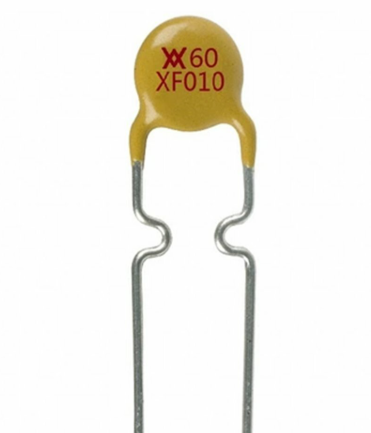
Correct - Provided you don’t short the LiPo, everything should be OK. I generally use a “fuse” on LiPo supplies just in case.
Eg. RXEF010 - will hold at 100mA and trip at 200mA. This allows for the XIAO to charge the LiPo and for the LiPo to supply enough current to the XIAO.
For higher power projects I use the RXEF017 (or larger).
Thank you very much! I partially solved it for the interim by going via the Xiao Expansion Board (instead of a Breadboard) which has a JST Connector input to plug the battery in and built-in battery management.
I used a Grove Expansion Board which has a in-built plug for a LiPo battery (via JST connector). I understand the Xiao Seeed has already in-built battery management so the risk of shorting / causing an issue with the battery should be reduced (though I haven’t tested in detail yet).
I have a doubt regarding high capacity batteries. I am using a 2500 mah battery and well the xiao onboard charger cannot supply enough current to charge it.
So I am using tp4056, the output is connected to the bat+pin with 2 mosfets in between forming an ideal diode so when there is 5V the bat+ path is cutoff
But the tp4056 is currently set to 1A and the 5v is coming from the Vbus pin, can i draw this much current safely from the pin?
Short answer , NO.
However… there are some posts that show using an external charger is possible and a better solution for large batteries. I would size the battery and be sure you need that level of AMPs
This is the circuit I am using to isolate the xiao onboard charger from the battery(and the TP4056), so I should not have an issue with the chargers fighting each other
I already have a few prototypes running with this and cumulative ~400 h runtime on them without issues so far.
I don’t think 1000ma. is too much with the MosFET
Someone else has posted successful outcome so, I wouldn’t be worried to try the same.
Makes a case for the PMIC to have that 2nd LDO Vout and some adjustability on this stuff through firmware.IMO.
Key Technical Specifications
Drain-Source Voltage VDS -30V
Continuous Drain Current ID -4.3A
On-Resistance RDS(ON) Low on-resistance (less than 46 mΩ at VGS = -10V
Gate Threshold Voltage: Operational gate voltages as low as 2.5V

 PJ
PJ 


