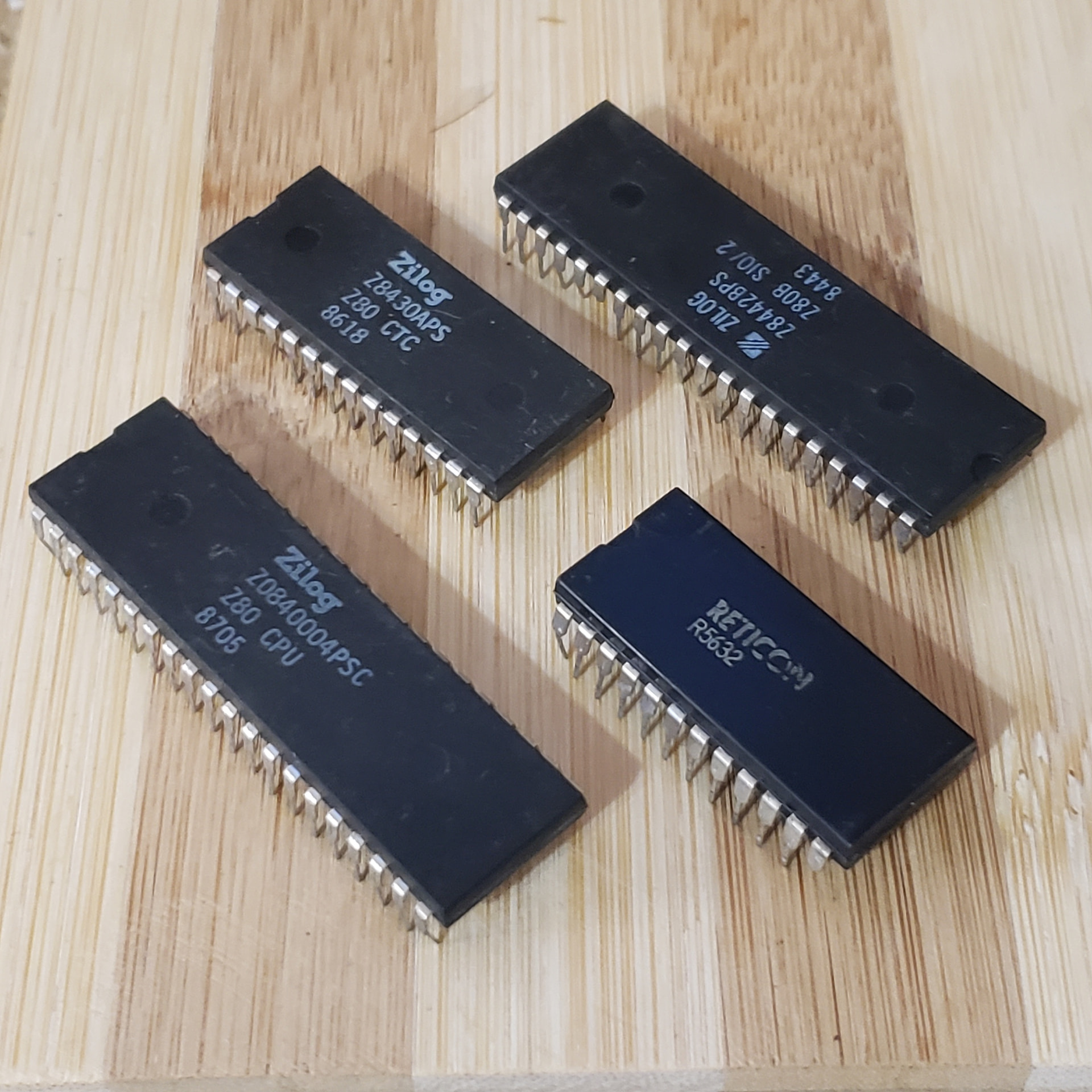
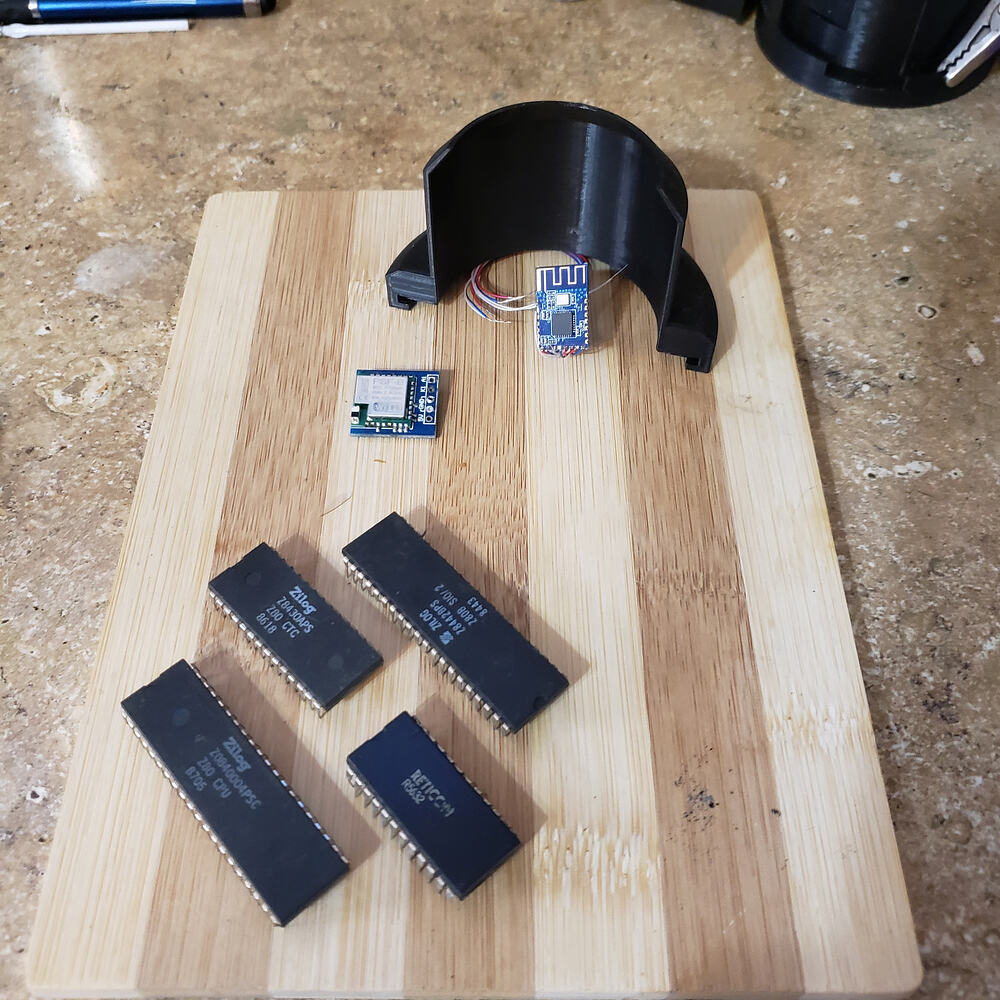
Todays Z80 ,
you got to give it up for the Arm Cortex M33 
The ARM Cortex-M33 is very much a spiritual successor to what the Z-80 represented in its era — but it is not the same class of thing.
The analogy is actually pretty good.
The Z-80 (1976)
The Z-80 was revolutionary because it put a complete programmable computer into a practical single chip.
Before:
- CPU boards
- support chips
- lots of glue logic

 The “22V10”, Sounded like a good name for a YT channel ..

After:
Z-80
 |
 +-- Memory
 +-- I/O
 +-- Peripherals
Suddenly engineers could build:
- controllers
- terminals
- hobby computers
- industrial equipment
It became the brain of countless systems.
Cortex-M33 today
The Cortex-M33 plays a similar role in modern embedded systems.
Today:
Cortex-M33
 |
 +-- Flash
 +-- RAM
 +-- GPIO
 +-- ADC
 +-- PWM
 +-- Timers
 +-- SPI/I2C/UART
 +-- Security
 +-- DSP capability
 +-- Radio interfaces
It is the “controller brain” inside:
- IoT devices
- wearables
- industrial sensors
- smart locks
- medical devices
- appliances
The difference is the scale.
The Z-80 did not win because it was the most powerful CPU.
It won because it was:
- accessible
- affordable
- well documented
- supported by an ecosystem
That same formula is why ARM Cortex-M dominates embedded today.
The nRF54 chips you’re playing with are basically that same philosophy, but now the “computer” includes:
CPU
+
radio
+
security
+
power management
+
sensors
+
wireless protocols
The crazy part is a modern $5–$15 embedded board has more computing capability than early desktop computers.
Our XIAO nRF54LM20A is, in a weird historical sense, the descendant of those Z-80 systems. Same mission:
Put intelligence into things.
The Z-80 made computers personal.
The Cortex-M33 is making intelligence ubiquitous.
 Great Time to be in TECH…

When isn’t it ?
GL  PJ
PJ