Hi everyone,
Disclosure first: I make these boards. I’m Simon from MTH (Make Things Happy), and I’d like to share how we use the XIAO ESP32-S3 in our modular I/O system and get feedback from people who know XIAO better than we do.
The idea
IoTsmart XIAO v.1.02 is a carrier board for a Seeed XIAO. It plugs into our IoTextra I/O modules: digital inputs, relays, SSR, MOSFET outputs, analog and combo boards. The XIAO handles Wi-Fi and the logic, and the IoTextra module handles the field-side I/O. If you need different I/O, you swap the module and keep the same controller and the same firmware approach.
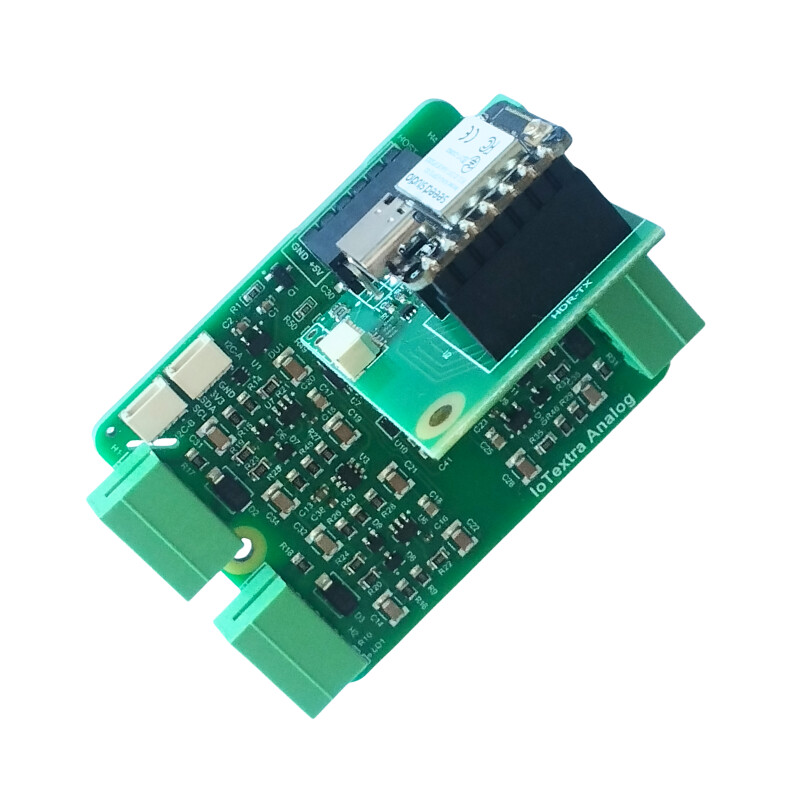
IoTsmart XIAO with XIAO ESP32-S3 on an IoTextra Analog v.3.12
What works today with XIAO ESP32-S3
- Tasmota: ready templates for Input, Relay2, SSR Small, MOSFET2, Octal, Octal2, Octal4, Analog, Analog3 and Combo.
- ESPHome: ready YAML configs for Input, Relay2, SSR Small, MOSFET2, Octal, Octal2 and Octal4. Analog and Combo configs are published but not yet verified on hardware.
- The pin mapping between the XIAO and the IoTextra HOST connector is in a single host-map file in the board folder, so you can see exactly which XIAO pin drives which channel.
Other XIAO boards: ESP32-C6 and ESP32-C5 are planned and not supported yet. XIAO RP2350 is not part of this setup.
Links
Questions for the community
- Which XIAO would you want supported next, C6 or C5?
- For those running ESPHome on XIAO ESP32-S3: anything you’d change in how the configs are structured?
Happy to answer technical questions.
1 Like
… why is it on a 90 degree daughterboard?
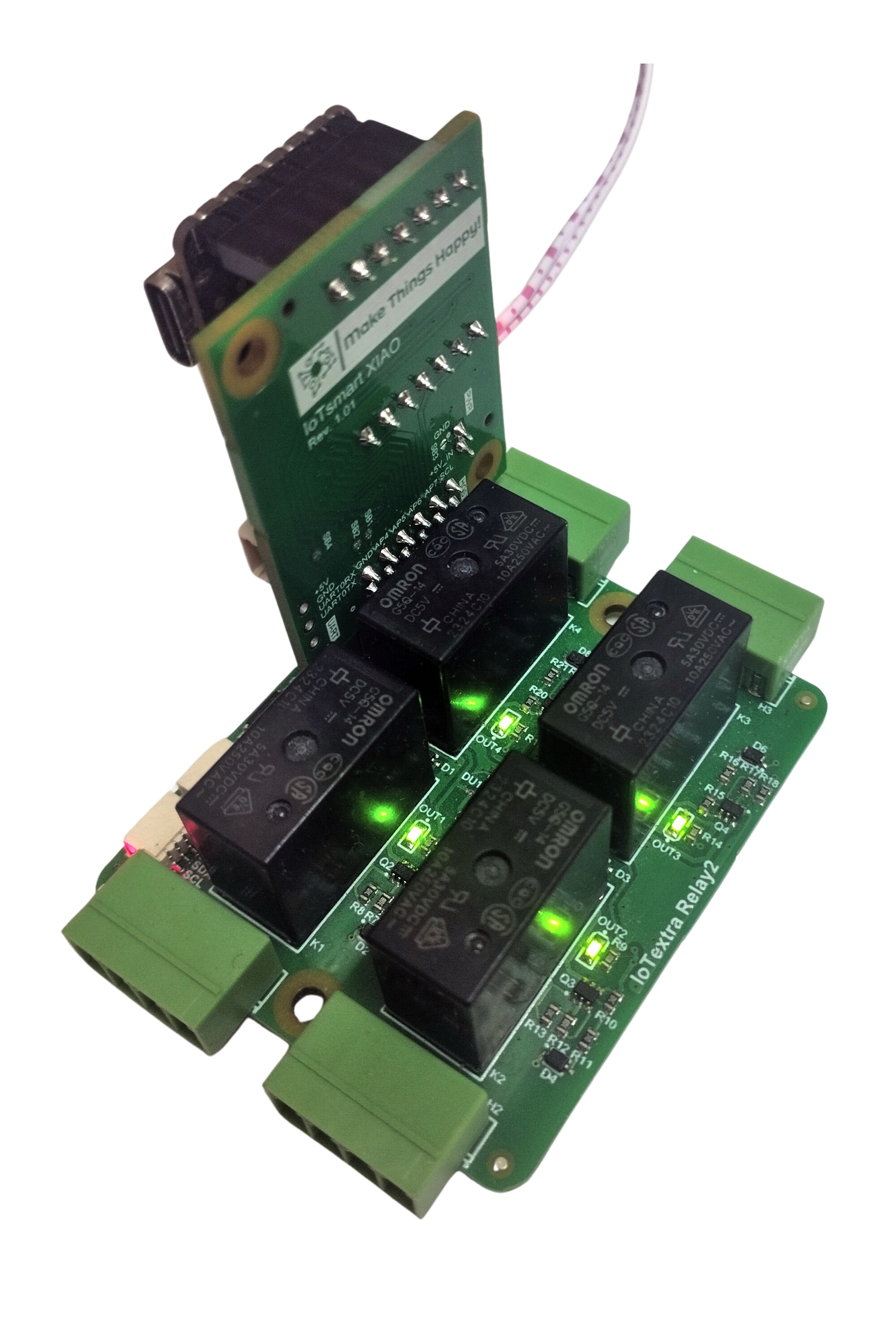
Good question. Some IoTextra modules are tall. Relay2 is a good example (photo below). The vertical carrier keeps the XIAO clear of them, so the same IoTsmart XIAO fits every module in the line.
There is also a horizontal version of IoTsmart XIAO for low-profile setups, and it’s available as well.
1 Like
Hi there,
Probably more to it, ?? I don’t see the ANTenna , so I’m wondering how it works without it. Probably not very well. 
seems like a solution looking for a problem? 
GL  PJ

Xiao is by nature “modular” one to many or standalone the connectivity is unlimited.
As I see it only “Mechanical Connection Modules”  are what’s missing imo

purpose built accesories, you see how well the “STICKY” / Posty is doing. a Xiao based BLE/WIFI display is next… I saw a 35" epaper today from TermNL

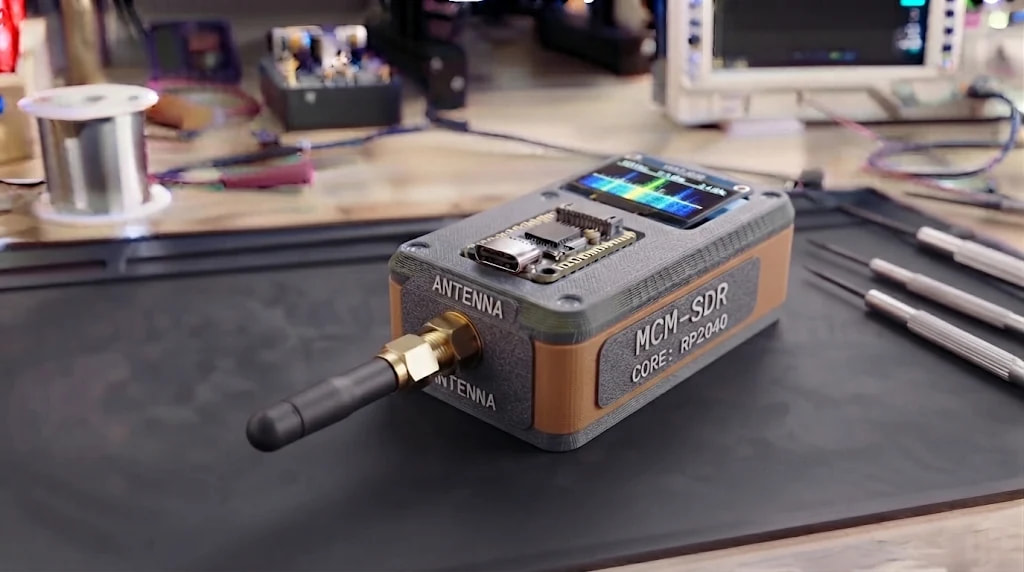
I like the SDR Xiao…
1 Like
@PJ_Glasso fair point. XIAO ESP32-S3 has no PCB antenna, only the U.FL connector, and the photo was taken without one. Which antenna to fit is up to the user: it depends on the task and on the enclosure they use or design. I use the standard Seeed antenna for XIAO myself.
As for the “problem”: the idea isn’t XIAO-to-XIAO modularity, it’s a bridge between the XIAO ESP32-S3 and the field side. The IoTextra modules carry the industrial I/O (isolated inputs, relays, SSR, MOSFET outputs, analog), and IoTsmart XIAO connects them to the XIAO ESP32-S3, with ready Tasmota/ESPHome configs for it.
Cool build. Factory-floor guy here (20+ years making machines talk to software), two things I’d look at:
-
Boot state of the relays. restore_mode: ALWAYS_OFF only kicks in once ESPHome is up. Between reset and that point (ROM, bootloader, every OTA reboot, a brownout) the HOST lines are whatever the hardware says. With active-low relays, a pull-up on each AP line on the IoTextra side is what actually keeps K1–K4 off. Are they there? Worth a scope on AP3/GPIO44 too, since that’s the UART0 RX pin.
-
RF, building on the U.FL point: in a metal DIN-rail box next to relay coils, route the pigtail outside the enclosure (bulkhead SMA or a panel-mount antenna), or you’ll be chasing “random” disconnects every time K1–K4 switch.
C6 vs C5: for industrial I’d go C5. 5 GHz gets you out of the 2.4 GHz soup you find in most plants.
Thanks, good questions.
Boot state: on Relay2 the inputs are designed so that a relay turns on only with an active low. Each channel has a PNP stage with its base pulled up to 3.3 V through 10k on the module itself, and the input goes through 10k and a series diode. So high-Z or a high level means the relay is off until ESPHome starts. Schematic: IoTextra-Digital/Relay2/v3.02/hardware/IoTextra_Relay2_3-02 Schematic.pdf at main · makethingshappy/IoTextra-Digital · GitHub
AP3 is indeed GPIO44 (UART0 RX), but during boot it’s an input and doesn’t pull the line low. UART0 TX, where the boot log goes, is not routed to the HOST connector.
RF: agreed, the metal of the DIN rail and the box has to be taken into account, and every site is different. I only plan for plastic enclosures; otherwise it simply won’t work.
C6 vs C5: IoTsmart XIAO doesn’t depend on which XIAO is plugged into it. I plan to try both XIAO ESP32-C6 and XIAO ESP32-C5 and make configs for them.
1 Like