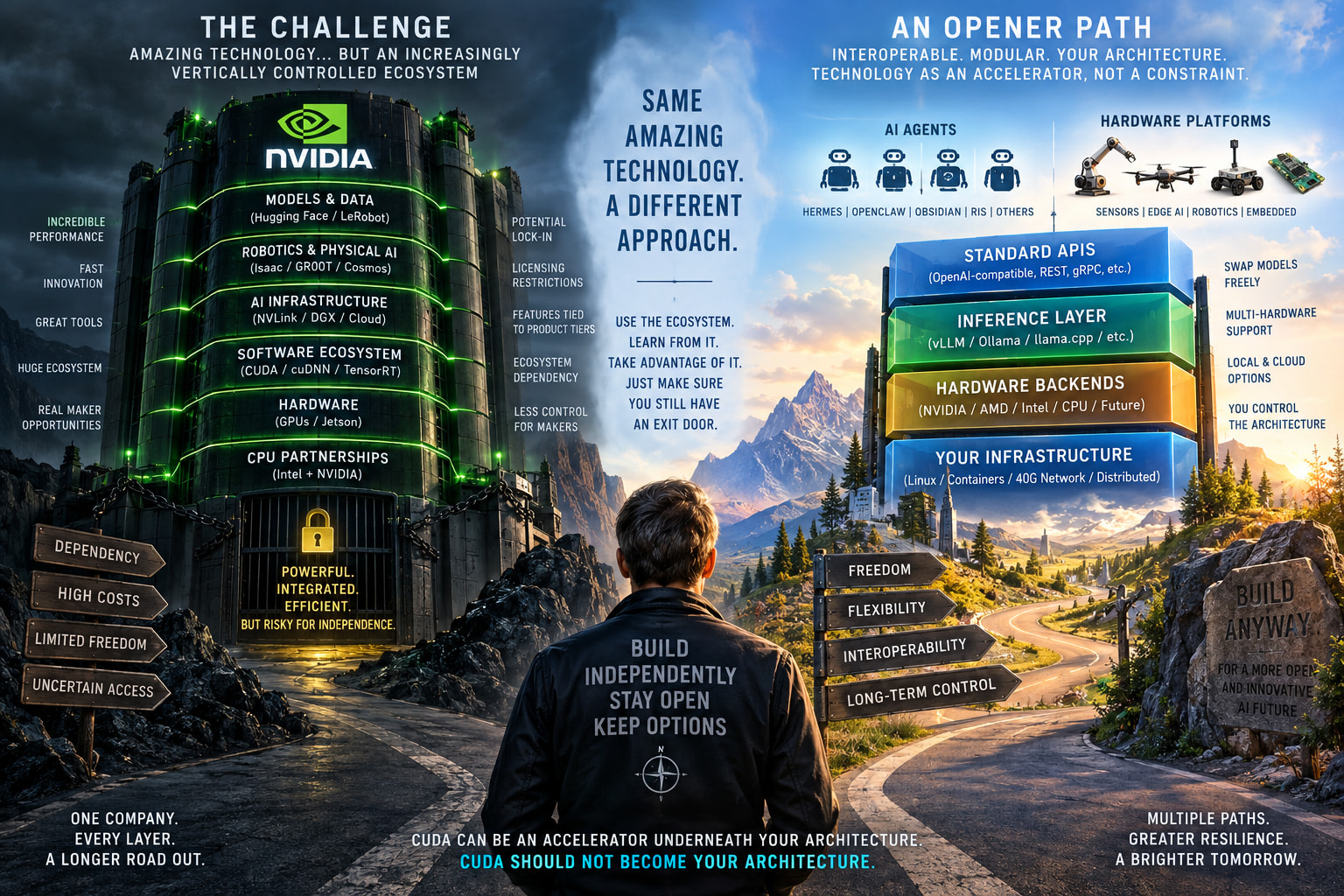
NVIDIA raising the Jetson Orin Nano Super from $249 to $399 is a 60% cash grab, plain and simple.
Let’s be real: dev kits used to be loss leaders designed to bring developers, tinkerers, and researchers into an ecosystem. You build cool stuff, deploy on their hardware, and scale up.
Slapping a 60% price hike on existing silicon in the middle of its lifecycle isn’t “supply chain adjustments”—it’s taking advantage of developer lock-in. Silicon fabrication costs on mature nodes don’t spike by 60% overnight. It’s just exploiting the artificial hype and forcing the maker and robotics community to pay enterprise margins.
When you price entry-level hardware out of reach for students, makers, and independent labs, you aren’t inspiring the next wave of AI innovation—you’re gatekeeping it.
Meanwhile, open-source alternatives with real industrial I/O, dedicated hardware video encoders, dual 2.5GbE, and efficient NPUs are sitting around the sub-$280 mark. Developers are going to vote with their wallets and start porting their vision pipelines to open silicon.
Shame on NVIDIA. The green tax is officially out of hand.
The push to funnel everyone into cloud-hosted AI was a calculated land grab to monetize compute as a recurring subscription rather than a one-time hardware sale. Big Tech convinced developers that edge hardware couldn’t keep pace with massive foundation models, pushing workloads into centralized data centers where they could rent you back API calls at high margins. Now that latency, bandwidth constraints, token billing, and severe privacy concerns have exposed the flaws of pure-cloud architectures, the industry is scrambling to “bring AI back to the edge.” But instead of building purpose-driven edge silicon from the ground up, legacy giants are trying to shoehorn bloated, power-hungry datacenter architectures into overpriced dev kits while charging enterprise premiums for basic entry points.
Gatekeeping the entry barrier with steep hardware price hikes is the exact opposite of fostering an innovative ecosystem. Historically, true technological revolutions happen when hardware is cheap, accessible, and democratized. Letting students, independent makers, and grassroots developers experiment without burning thousands of dollars. By pricing entry-level kits out of reach, NVIDIA is prioritizing quarterly wall-street margins and ecosystem lock-in over open community growth. Open silicon platforms, accessible NPUs, and local-first open models are already proving that practical edge intelligence doesn’t need to be locked behind proprietary tollbooths, and developers will inevitably migrate to hardware that respects both their budgets and open architecture.
Add a B.S. made up "United States of America " protectionist government overreach and corruption, are we cooked?

As You were.. 
GL  PJ
PJ 
Yeah, this one’s a doozy. From The Verge/Bloomberg (Aug 22, 2026):
 “Nvidia’s AI chips are about to get more expensive too”
• >15% price hike on server GPUs — Nvidia already notified its biggest customers (Oracle, Microsoft, and the data center builders behind them)
• Comes on top of earlier GeForce price hikes this year (RTX 5080 already got bumped at Best Buy)
• Blame game: Nvidia blames the AI demand spike driving up component prices — the same AI boom their own chips created
• Q2 earnings report dropped this past Wednesday (Aug 27), so we got the full picture now
The really spicy part: customers building AI infrastructure for the people who also bid up GPU prices are getting squeezed on both ends. Classic monopoly rent-extraction once you’re the only game in town for CUDA-accelerated compute.
Probably not great for your own AI build costs either if you ever scale up beyond the Dual A4500’s. 
LOCAL AI or None!



 NVIDIA–Hugging Face Watch: Maker Access Alert
 Yellow flag — confirmed reduction in free developer access, but not evidence of NVIDIA-specific hardware lock-in.