That did the trick, thank you very much
Hi everyone,
I’m working on a small project and trying to figure out the correct FPC connector pitch for one of Seeed’s Xiao boards. I’ve seen a few different pin-spacing specs mentioned in different places and want to make sure I get a compatible connector before ordering.
Has anyone here run into this and can confirm the right spec, or point me to the correct datasheet section? Would appreciate any guidance — still fairly new to working with these boards.
Thanks in advance!
Hi there,
So a lot of the wiki’s include the schematic and BOM, most schematics also have a full mfr. part no. embedded often in them is the Pitch or pin spacing. I like to check the availability with the parts suppliers on any of the online PCB maker, Easy Eda for example has a huge catalog of all parts pretty much used today. Pic’s, footprints, alternatives, etc.
What FPC are you looking at ? I did something like this 
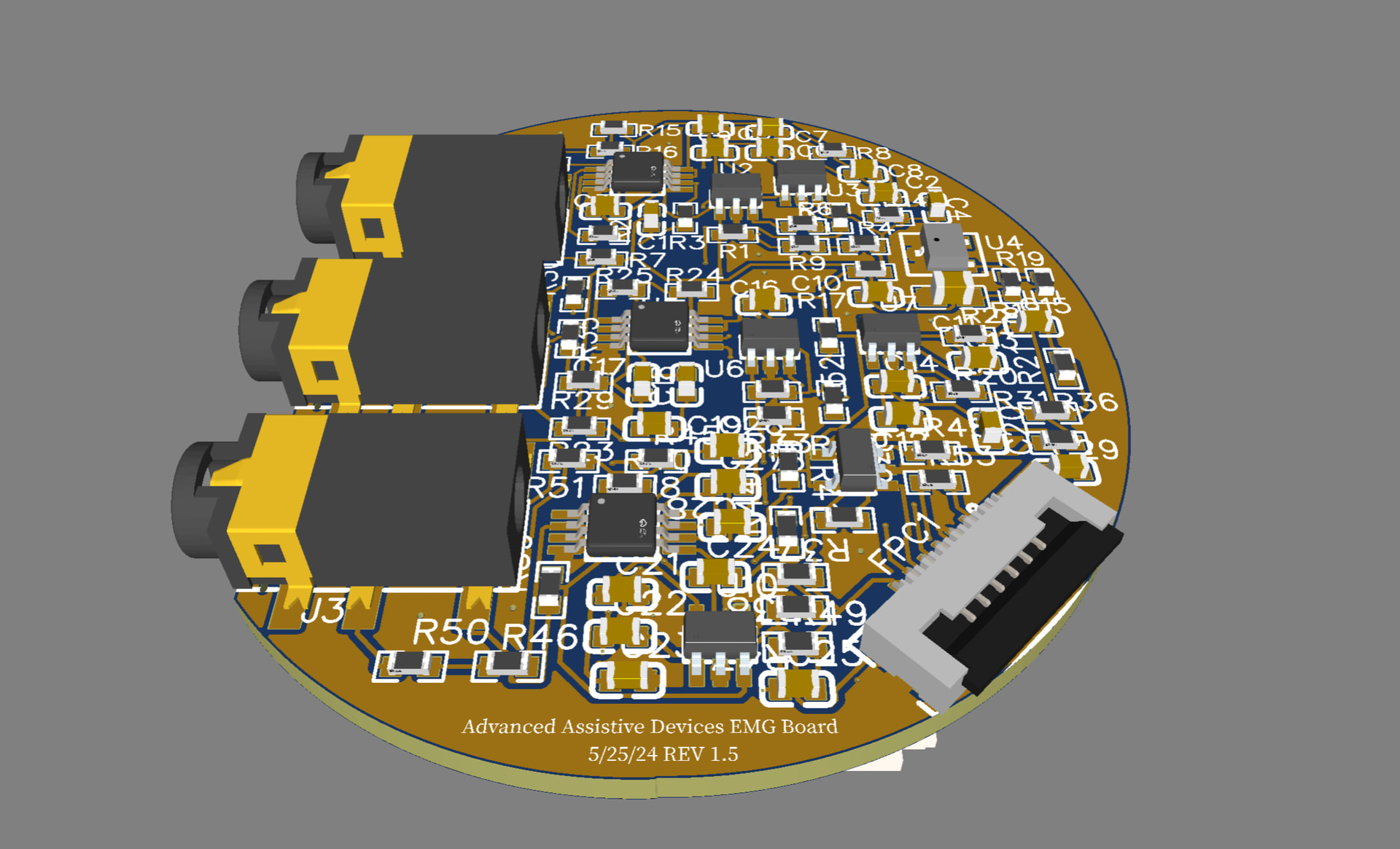
HTH
GL  PJ

Hi,
I’m building a battery-powered, wall-mounted family dashboard on the reTerminal E1003 with ESPHome. Small children use it, so a tap on the screen has to wake it.
Your own product page says this is possible:
“With built-in touch support in the SenseCraft HMI firmware, users can wake the display with a simple tap and navigate between pages naturally through finger interaction.”
So the hardware clearly supports it. My question is how to reach the same behaviour from ESPHome — and what it costs in battery.
What I’ve established so far:
GT911 INT is on GPIO2, RST on GPIO48, I2C on SDA GPIO19 / SCL GPIO20 (your ESPHome cookbook “Buttons, Buzzer, LED, Battery, Touch & Low Power”).
GPIO2 is RTC-capable on ESP32-S3 (RTC GPIOs are 0–21) and isn’t a strapping pin, so it ought to be legal in an ext0/ext1 wake mask.
Every ESPHome example I can find wakes on GPIO3 (KEY0), never on touch — including yours and LowPower_DeepSleep.ino.
A community ESPHome project for this board goes the opposite way on purpose. It holds GPIO48 LOW before sleeping, with the comment: “Latch GPIO states before deep sleep to prevent SD card and touch controller from drawing power during deep sleep.” It also disables I2C on GPIO19/20 and keeps RTC_PERIPH powered for ext1. That suggests the GT911 costs meaningful current (~5 mA reported) if left alive.
Your 6-month battery figure assumes one refresh per day.
My questions:
Is SenseCraft’s tap-to-wake true deep sleep, or light sleep? That single answer decides everything else. If it’s light sleep, the 6-month figure and the tap-to-wake claim don’t apply to the same mode, and it’d be good to say so publicly.
What does SenseCraft do with GPIO48 during sleep? Does it keep the GT911 powered (and accept the current), or is there a lower-power GT911 scan mode that still asserts INT on touch?
Is GPIO2 (RTC_GPIO2) validated by Seeed as an ext1 wake source on this board?
INT polarity — what’s the factory value of GT911 register 0x804D bit 0 on this panel? That decides ANY_HIGH vs ANY_LOW in the wake mask.
INT idle behaviour — on other GT911 boards INT free-runs at ~24 Hz untouched, because the controller re-asserts until the host reads the coordinate buffer. Does INT stay idle on the E1003 once 0x814E is cleared? Can it be configured as a level output instead of edge pulses? If it free-runs, an ext1 wake source would just wake the device continuously.
Realistic battery life with touch-wake enabled — roughly what should I expect with, say, four scheduled refreshes a day plus occasional taps?
A worked ESPHome snippet showing tap-to-wake would be the ideal answer, but plain numbers and a yes/no on question 1 would already get me a long way. If it simply isn’t reachable from ESPHome today, please say so — that’s useful too, and it belongs in the cookbook.
Thanks!
Hi there,
And Welcome here…
SO these things are AWESOME..
That being said…
let’s run it down a little, I plan a similar thing like you with HA and a custom IO mod to the S3 Plus on here..
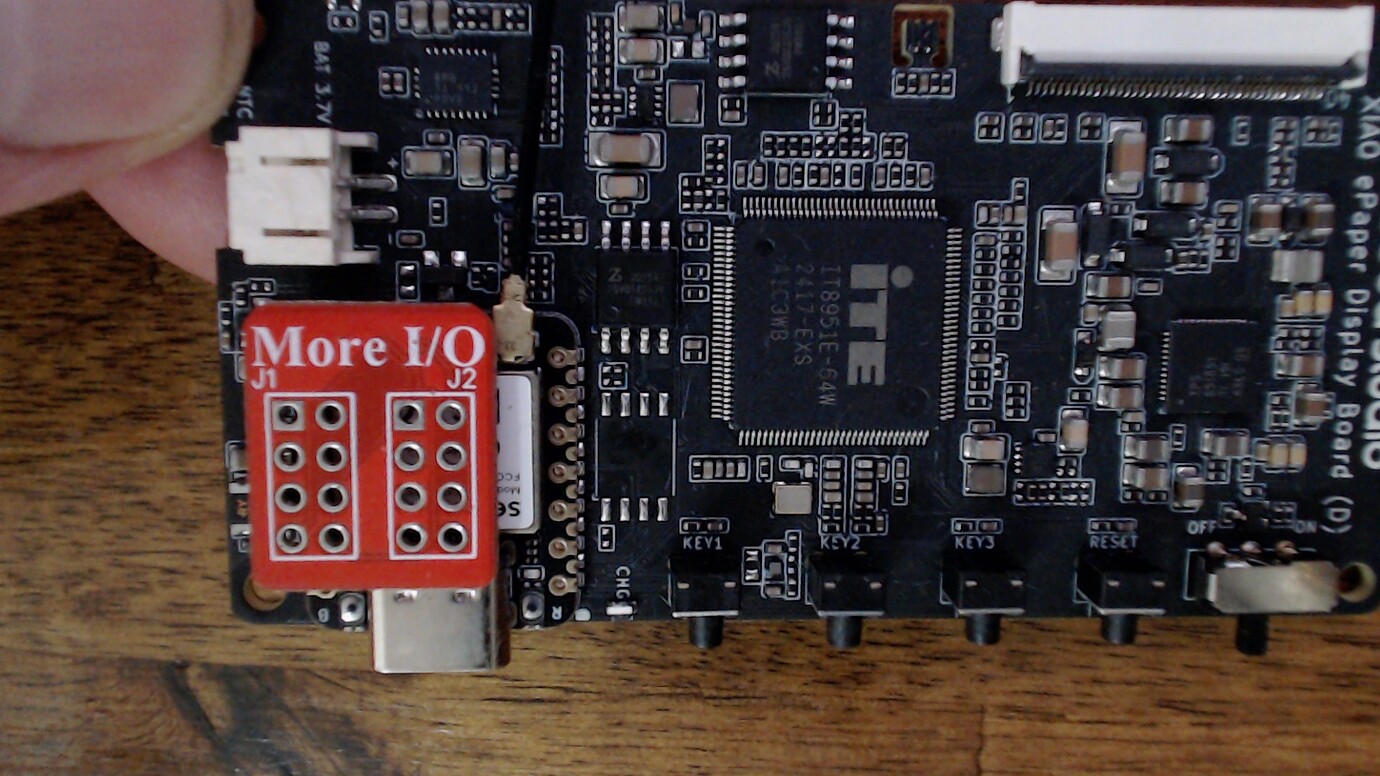
SO it appears you are conflating two completely mutually exclusive operating profiles from Seeed’s marketing sheet:
-
SenseCraft HMI Mode: Active / light sleep UI mode where the capacitive digitizer remains fully powered and scanning, enabling instant tap-to-wake and touch navigation.
-
6-Month Battery Mode: True ESP32-S3 deep sleep with the peripherals completely unpowered (IT8951 EPDC off, SD off, GT911 clamped/reset via GPIO48 LOW), waking strictly on a timer or physical RTC button press (like KEY0 / GPIO3 / GPIO4).
Here is the exact breakdown of why your plan won’t hit multi-month runtime and how the hardware actually behaves:
1. SenseCraft vs. Deep Sleep Battery Math
-
The 6-month claim assumes waking once or twice per day, doing an e-ink refresh over SPI, and immediately dropping into…

 true ESP32-S3 deep sleep
(<100uA with GPIO hold latching). -
The GT911 capacitive digitizer in active scan mode draws ~ 4 to 5mA. Even in the GT911’s lowest internal “Green/Monitor” idle polling mode, it draws hundreds of microamps to over a milliamp.
-
On the built-in 3000 mAh Li-ion battery, a continuous 4.5mA floor from the touch controller means the battery will drain in under 25–28 days without a single screen refresh or Wi-Fi wake. It physically cannot reach 3 to 6 months with the digitizer listening.
2. The GPIO48 / Latching Trap
-
As noted in the community optimizations (like
ar0v3r’s repo), GPIO48 controls the GT911 reset/power line. -
If you don’t use
gpio_hold_en()andgpio_deep_sleep_hold_en()on the ESP32-S3 before entering deep sleep, unheld pins float/drive HIGH, keeping the GT911 and SD circuitry alive and leaking 5mA. -
To get the advertised quiescent sleep floor, you must pull GPIO48 LOW and isolate the I2C lines, which completely cuts the digitizer off.
3. GT911 INT Pin Quirks on ESP32-S3
-
While GPIO2 is technically RTC-capable on the ESP32-S3, GT911
INTlines are edge-driven pulse interrupts designed to signal “new coordinate data available in 0x814E buffer.” -
If left powered without an active host reading and clearing the coordinate buffer via I2C, the GT911 buffer remains dirty, causing the interrupt line to stay asserted or continuously re-assert, throwing the ESP32-S3 into a rapid, unending wake loop under
ext1.
the marketing divide gently:
-
If you want multi-month wall-mount battery life, then you must accept waking on a physical button (KEY0 / GPIO3 / GPIO4) or timed interval while cutting power to the GT911 via GPIO48.
-
If tap-to-wake is a strict requirement for children, the device must either be wall-powered via USB-C or treated as a ~3-week recharge cycle device.
Not impossible to be sure with the hardware, but not both or opposite the power specs needed, IMO 
HTH
GL PJ
interesting forum, thanks for contribution