Hi,
I am trying to develop a wearable medical device using the XIAO ESP32C6. I know on the Wiki page, it is recommended to use a 3.7V Lipo battery to battery this microcontroller. However, I am wondering if it is possible to power it using a non-rechargeable battery such as the CR2032. (I am also open to other battery options but I want to keep it compact and light.) I hope to hear some advice from people who have done something similar before.
Thank you.
i would say it would be a waste… the 3.7v Lipo is the best way to go… anything will be a wasteful pain
When selecting a non-3.7VLipo and powering from the 5V pin, consider that it must be capable of supplying a voltage of 3.6V or higher and (if wireless is required) a peak current of 350mA.
Thank you very much.
Thank you for the reply. I am a little lost on what you meant by “powering from the 5V pin”. Is it not recommended to connect the battery to the designated battery pins? Or does this only apply to non-rechargeable batteries?
Only rechargeable batteries can be connected to the battery pad.
I see. Then I guess I will have to connect the battery to the 5V pin.
if you are doing ultra low power you may consider an ATtiny processor… what is your device doing?
what he is noting is the threshold limit for the 3v3 is quite high… this is the difficulty of power from non-lipo battery… it is unable to hold the 3v3 threshold thruought the life of the battery… and so the device may soon or on initial startup experience brownout issues
My device uses LEDs and photodiodes to collect the refraction of light under the skin. I will look into ATiny processor but I think the XIAO ESP32 makes more sense because of its WIFI/BLE support.
like a pulse oximeter?
https://www.amazon.com/Wellue-Fingertip-Saturation-Batteries-Bluetooth/dp/B085ZFDMMX
It is kind of like this product. However, my project will (probably) also use deep learning to analyze the data.
interesting… you may be able to use this device… you should be able to communicate with it and download the real time data just as the phone app can do
If miniaturization is important, nRF52840 with low current consumption and minimum operating voltage should be used!
So, only Li-Po can be used with the Xiao nRF52840? I was hoping to use non-rechargeable 3.3V Li-SoCi₂ or 3V Li-MnO₂, because I want to use it in freezers at -18°C with LoRa and without ever charging.
Hi there,
So, We see this come up often…
If YOU 
 never connects USB and a battery simultaneously, running purely off a 3.7V LiPo or lithium-cell battery pack soldered to the underside pads is completely safe.
Here is why that distinction matters depending on the specific board and setup:
-
No Back-Power or Collision Risk: The danger of connecting a non-rechargeable battery (or an unregulated raw battery source without charge management) occurs when 5V USB is inserted, because the board’s charging or power-path circuitry tries to force current backward into the battery. If USB is never plugged in, there is zero risk of back-feeding or bus collisions.
-
Boards Lacking an Onboard Charger (e.g., XIAO RP2040): On boards without dedicated LiPo charging ICs, Seeed explicitly warns never to plug in Type-C while a battery is attached. Running them strictly from the battery pads in isolation is the standard operating procedure.
-
Onboards with Dedicated Charging (nRF52840, nRF54L15, LM20A): Even though these feature charge controllers or PMICs, powering exclusively from the battery pads bypasses the USB-C VBUS protection diodes and 5V step-down regulator quiescent losses entirely, which is essential for hitting true sub-microamp sleep currents.
-
One Watch-Out (Brown-out / Power-On-Reset): When running strictly off a battery without USB present, the MCU must cleanly handle cold battery connection transients. Ensure the battery voltage sits between 3.6V and 4.2V so the board’s internal buck/LDO starts cleanly on the initial attach.
-
PRO TIP…
connect (solder) the battery pigtails first, order the battery with a connector. Allows for a clean connection initially and easy change out 

HTH
GL  PJ
PJ 
This Question is a perfect example and often asked, for the Seeed’s “ASK AI” it is very good and getting better The LINK should be on a sticker in the capsule IMO.
Start there.
Thank you for your reply, but I understand very little about this subject. Your reply: “battery voltage sits between 3.6V and 4.2V”; Xiao nRF52840 docs: “Input voltage (BAT): 3.7V, [email protected]”; Wio SX1262 docs: “VCCop 1.8-3.6V, 125mA@22dBmi”. I was thinking more of commonly available non-rechargeable batteries such as CR123 with a nominal voltage of 3V. Maybe LS14500 (because available on marketplaces) with 3.6V for a max burst of 250mA for 200ms every 2,000ms. Both batteries fully discharge at ca 1.8V. My max Radio Lib Time On Air was ca 2,000ms, and the total module blocking transmit time was ca 6,000ms. I do not have the right tools & knowledge, but AI says that both are acceptable with capacitors for the nRF52840 & SX1262, but I understand now that those batteries are not an option for the Xiao nRF52840…
Hi there,
Sure , no problem Just know that,
- The battery solder pads on the underside of the XIAO nRF52840 route directly to an onboard 3.3V LDO regulator.
- Feeding a nominal 3.0V cell (like a CR123A) into the BAT pads will immediately cause brownouts: the regulator requires around 3.5V–3.6V minimum to output a stable 3.3V rail.
- While the nRF52840 SoC itself can run down to 1.7V, feeding low voltage into the onboard BAT input forces the 3.3V rail to sag below operating tolerance right out of the gate.
- While you could technically bypass the LDO and feed 1.8V–3.3V straight into the 3V3 header pin (using the nRF52840’s internal DC/DC regulator in Normal Mode), the SX1262 and battery chemistry introduce other fatal bottlenecks.
Basically you’re mixing bare silicon component specifications with board-level power subsystem limits, and confusing power rails across the system:
-
Bare Silicon vs. Board Power Architecture:
-
He quotes the bare SX1262 transceiver datasheet operating range (1.8V – 3.6V).
-
However, when used as an expansion module or kit with the XIAO, the SX1262 is powered from the XIAO’s regulated 3.3V power bus, not straight from the battery.
-
The XIAO’s underside BAT pad feeds an onboard charge controller and a 3.3V LDO regulator. That regulator has a dropout voltage of ~200–300 mV, meaning the battery input rail must sit at > 3.5V–3.6V** just to keep the 3.3V line stable.
-
The fact that the standalone nRF52840 SoC and SX1262 can run down to 1.8V in raw, direct-supply battery designs is irrelevant here because the XIAO board-level circuitry sits between the battery and the chips.
HTH
GL PJ
Hi there,
worth noting , if you look at the Nrf’ parts they can also on custom PCB’s use a VCC (power of 1.8vdc) pretty low and for batteries, The nrf54L15 in this setup here,
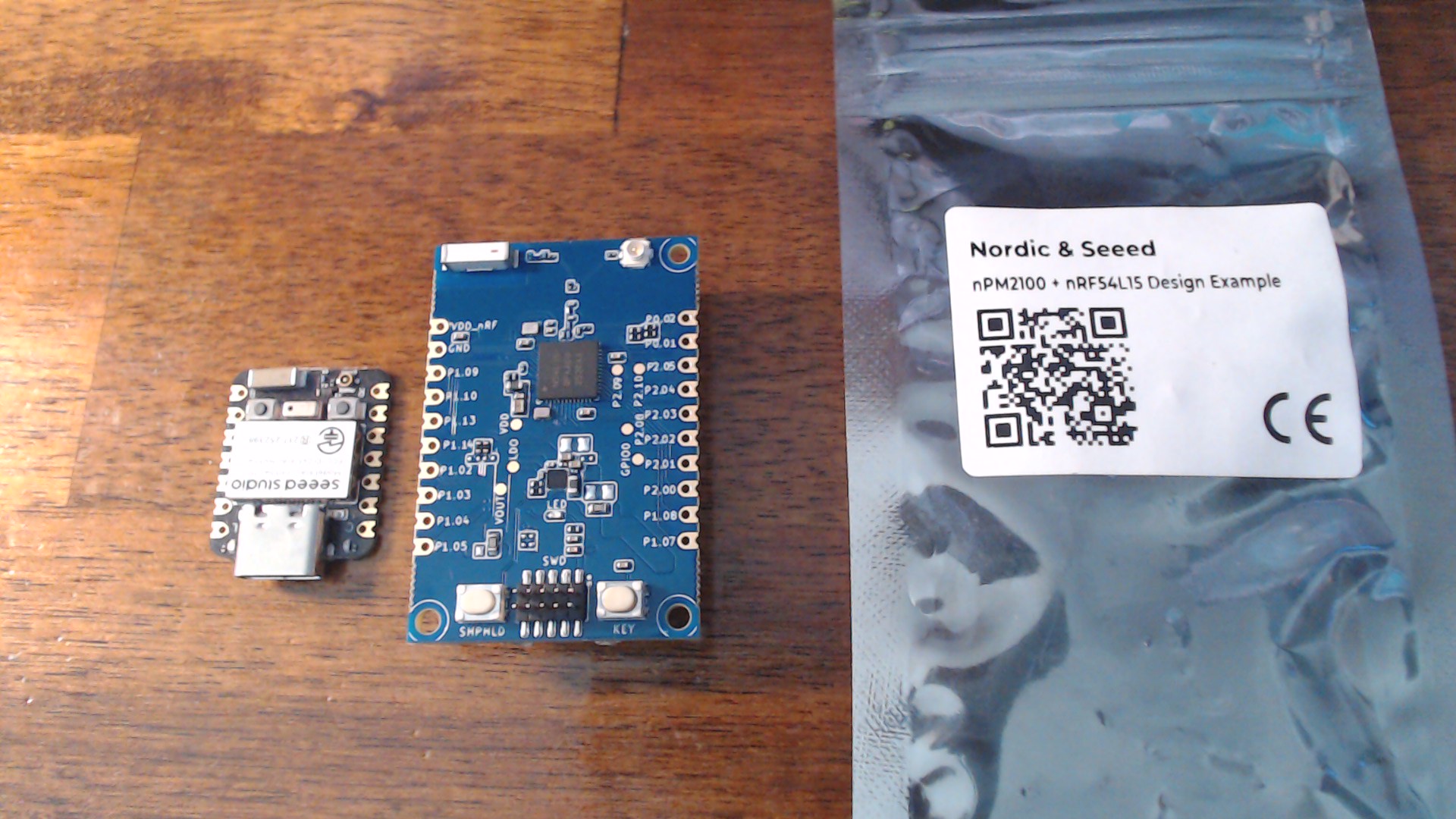

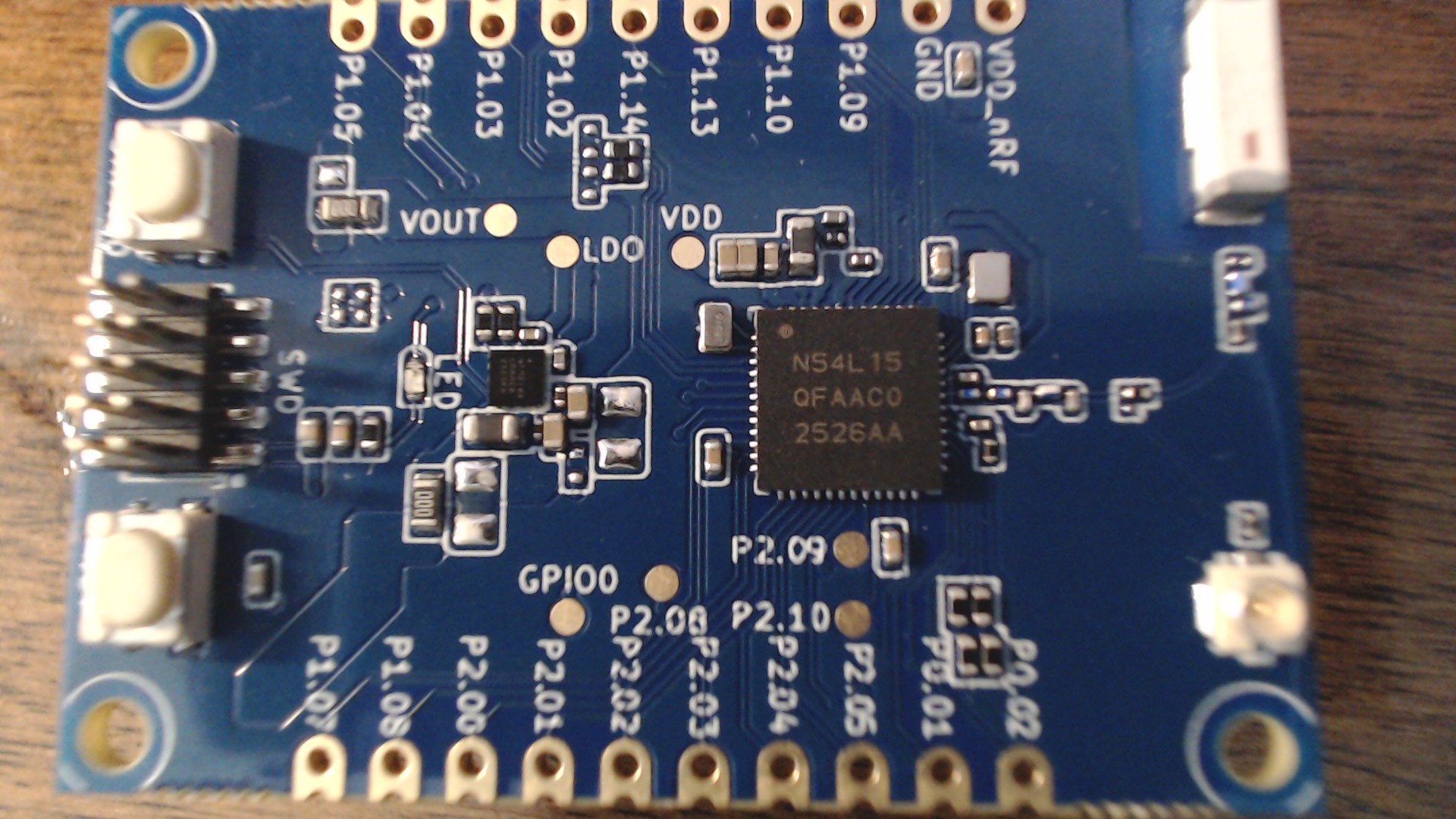
there’s another thread on here about it, also nordic git hub with “EVERYTHING” tp make your own
including a DFU BLE mobile app , so you can update it over the Air.
Yes, mixing many things. I am learning.
Regarding LDO: In RadioLib, there is a choice between LDO and DC-DC. What is the right choice?
Regarding nRF54: It cannot go below -20°C if I remember. In freezers -24 to -18°C max. Outdoor down to -35 sometimes.